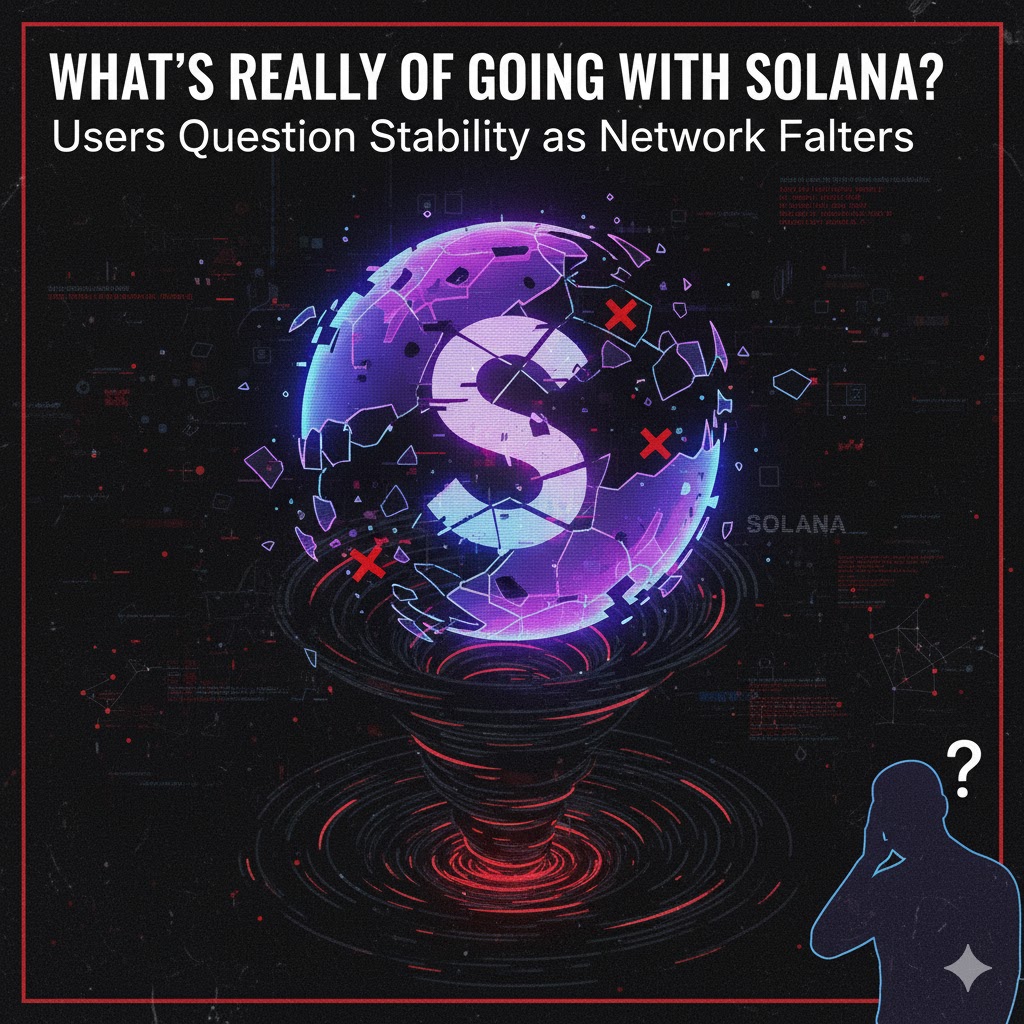
The Solana (SOL) community is in turmoil once again, as recent discussions on Reddit highlight mounting frustration over the network’s reliability and transparency.
Network Struggles Erode Confidence
For a project once hailed as the “Ethereum killer,” Solana’s recent instability has raised eyebrows. Many users report frequent transaction delays, slower block confirmations, and inconsistent performance — even during periods of low network activity.
One Redditor described the situation bluntly: “We’re seeing more issues now than ever before. The speed advantage means little if you can’t trust the network to stay online.”
These interruptions have fueled debates about whether Solana’s architecture is stretching too thin to support its ambitious throughput goals.
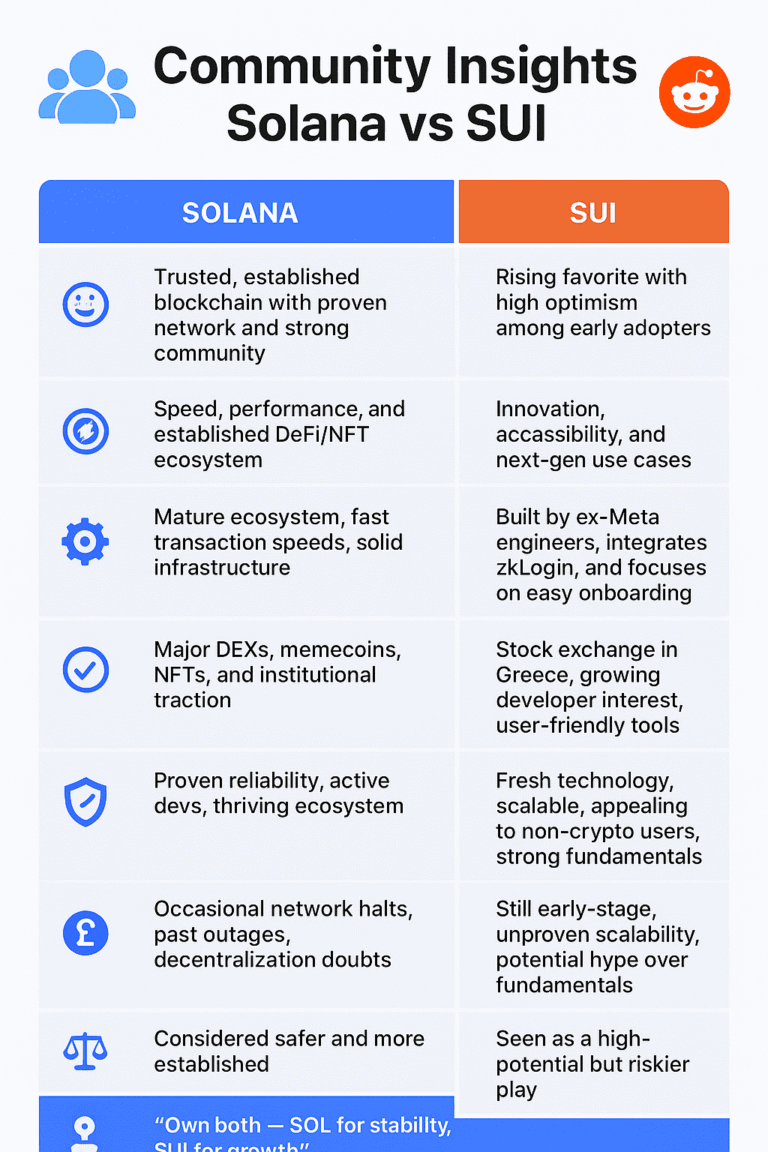
Also See Latest comparison on Can Sui Beat Solana
Developers Feeling the Strain
Developers building on Solana are also voicing concerns. According to several community members, validator nodes and RPC endpoints are struggling to handle sustained demand. When these fail or lag, the entire chain of decentralized applications — from trading platforms to NFT marketplaces — suffers downstream effects.
Projects that depend heavily on real-time data or transaction reliability are being forced to engineer complicated fallback systems just to keep apps functional. Some developers admitted they are “spending more time firefighting than innovating,” which could slow ecosystem growth if the issues persist.
Investors React With Caution
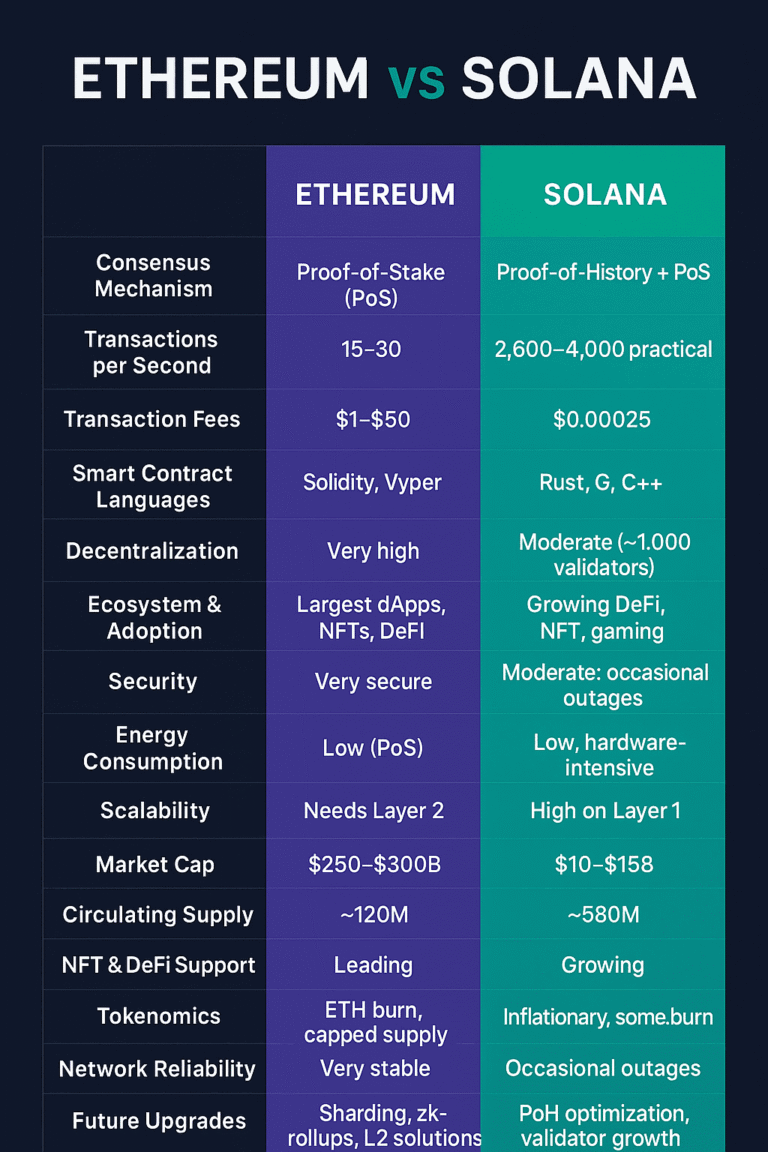
Investors, meanwhile, are taking a more cautious stance. While loyal supporters still believe Solana’s technical potential remains strong, others are starting to diversify. The ongoing issues have prompted some traders to shift capital toward more stable ecosystems like Ethereum or layer-2 networks such as Arbitrum.
Despite this, optimism hasn’t disappeared completely. Many long-term holders see Solana’s struggles as natural growing pains for a fast-moving blockchain that’s still maturing.
What Solana Needs to Do Next
Community discussions point to a few key steps that could restore faith in the network:
-
Improve RPC decentralization – Reducing reliance on a few centralized infrastructure providers would help eliminate bottlenecks.
-
Enhance validator support – Clearer guidance, better incentives, and performance monitoring could help maintain network stability.
-
Increase transparency – Detailed, timely updates about outages or fixes would show accountability.
-
Support developer tools – Grants for tooling and infrastructure projects could make dApps more resilient to network fluctuations.
The Bottom Line
Solana’s promise of lightning-fast and low-cost transactions remains attractive — but reliability is becoming the real test. As one community member put it, “Speed means nothing without consistency.”
If Solana can address its structural weaknesses and regain developer confidence, it still has a chance to lead the next phase of blockchain growth. But for now, the community’s message is clear: the network must prove that it can handle the scale it once boasted about.